Default
Technology Spotlight: QCi’s Good Vibrations Might Just Save the World
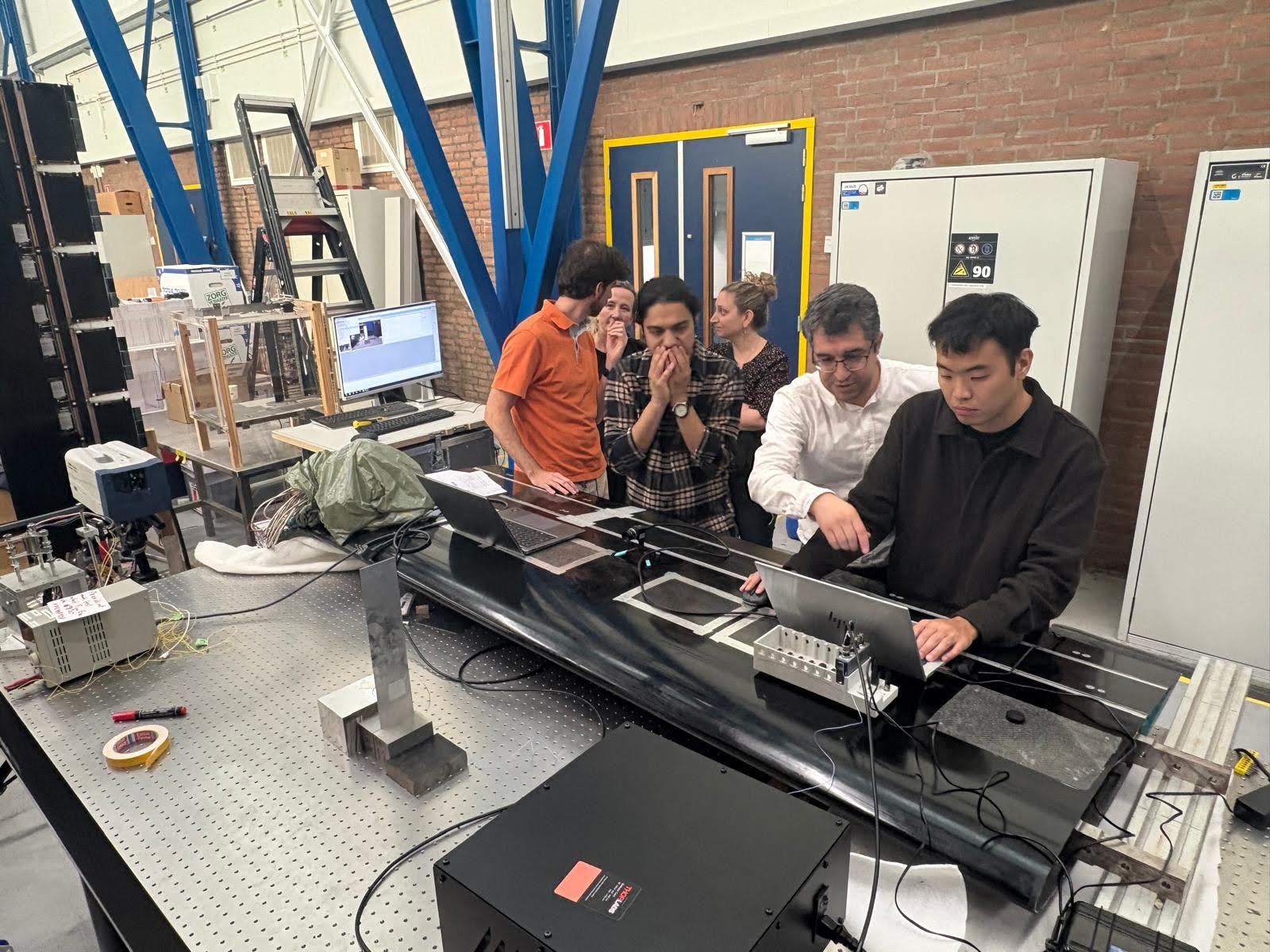
The ability to see beneath the surface isn’t just for judging personalities – it’s essential for materials science, sustainable development, and infrastructure safety. And QCi is partnering with TU Delft to bring the quantum future to subsurface measurement.
Dr. Vahid Yaghoubi of TU Delft’s Quantum-enhanced Vibration data analysis and AI (Q-VAlbe) Lab is developing a next-generation structural health monitoring (SHM) system that brings together cutting-edge detection technology, high-performance energy-efficient computing, and advanced AI to find hidden structural faults before they cause problems. QCi’s Quantum Photonic Vibrometer (QPV) is at the core of this system, providing the ability to sense extremely sensitive vibration differences in composite materials and find structural damage at its earliest stages.
Dr. Yaghoubi’s project focuses on the composite materials that make up propellers, such as those in aircraft and wind turbines. These propellers are made up of different materials, such as carbon fiber, Kevlar, fiberglass, and epoxy, to create thin, lightweight propellers that are stronger and more durable than other materials alone. Vibrometry can detect the different materials that go into these composites based on the different ways they respond to vibrations, but they can also detect subtle differences due to blank spaces or cracks in these materials.
More sensitive vibrometry and more advanced analytical methods provide a system that can detect really fine cracks and other variations below the surface of these composites, giving the earliest possible warning of damage. This gives us more chances to resolve issues before they cause problems, saving money, reducing downtime, and improving the efficiency and sustainability of systems that rely on composite propellers.
Vibrometers work by shooting a laser at a surface to induce a vibration in the material. The light scattered back from the surface is then shifted depending on how the surface responds. Different materials respond differently to vibration, so vibrometry can be used to identify different materials. They are already used to analyze materials, perform biological diagnostics, and even to detect buried hazards like landmines, but they are limited by how sensitive the instruments are that detect the scattered light from the surface.
QCi’s QPV takes these measurements to the next level by taking sensitivity down to the single-photon level. The QPV can not only provide detection with small amounts of laser light, but can also operate at high sensitivity in noisy environments. When combined with machine learning protocols, it’s been shown to enhance the ability to distinguish among different materials in a structure.
Using quantum-enabled methods to enhance the sensitivity of vibrometry measurements is a key part of the effort to improve early detection of structural faults in critical infrastructure. QCi’s QPV, as a part of Dr. Yaghoubi’s multi-million Euro project, will make our world safer, more efficient, and more sustainable by giving us earlier warning before the failure of these materials in energy generation and transportation. Quantum technology will not only save companies money, but may just save our infrastructure.
Read more:
https://opg.optica.org/oe/fulltext.cfm?uri=oe-33-13-27003
https://quantumcomputinginc.com/products/r-and-d-offerings/vibrometer